Energiepark Bad Lauchstädt recognised as second winner of the Hydrogen TCP Awards of Excellence
Energiepark Bad Lauchstädt has been honoured as the second winner of the Hydrogen TCP Awards of Excellence 2026. The first winner is the EU-funded project H2GLASS. The award recognises outstanding international projects that advance the development and application of hydrogen technologies. Energiepark impressed with its holistic approach.
International recognition for the hydrogen ramp-up
The Hydrogen Technology Collaboration Programme (Hydrogen TCP) was established under the International Energy Agency (IEA) to promote international cooperation and knowledge exchange around hydrogen technologies. Since 2022, it has been awarding the Awards of Excellence together with the Hydrogen Initiative of the Clean Energy Ministerial (CEM-H2I). The award recognises projects that actively strengthen demand for hydrogen through field-proven innovations and cross-sector dialogue. For the 2026 edition under the motto “From Supply to Demand: Driving Hydrogen Solutions”, 18 projects from twelve countries applied.
With its integrated approach, Energiepark Bad Lauchstädt aligns particularly well with the motto of this year: the real-world laboratory links production, transport and industrial use of green hydrogen, thereby demonstrating a concrete application across the entire value chain. At the same time, the project creates space for cross-sector exchange and provides experience of how technical, economic and regulatory requirements interact under real-world conditions.
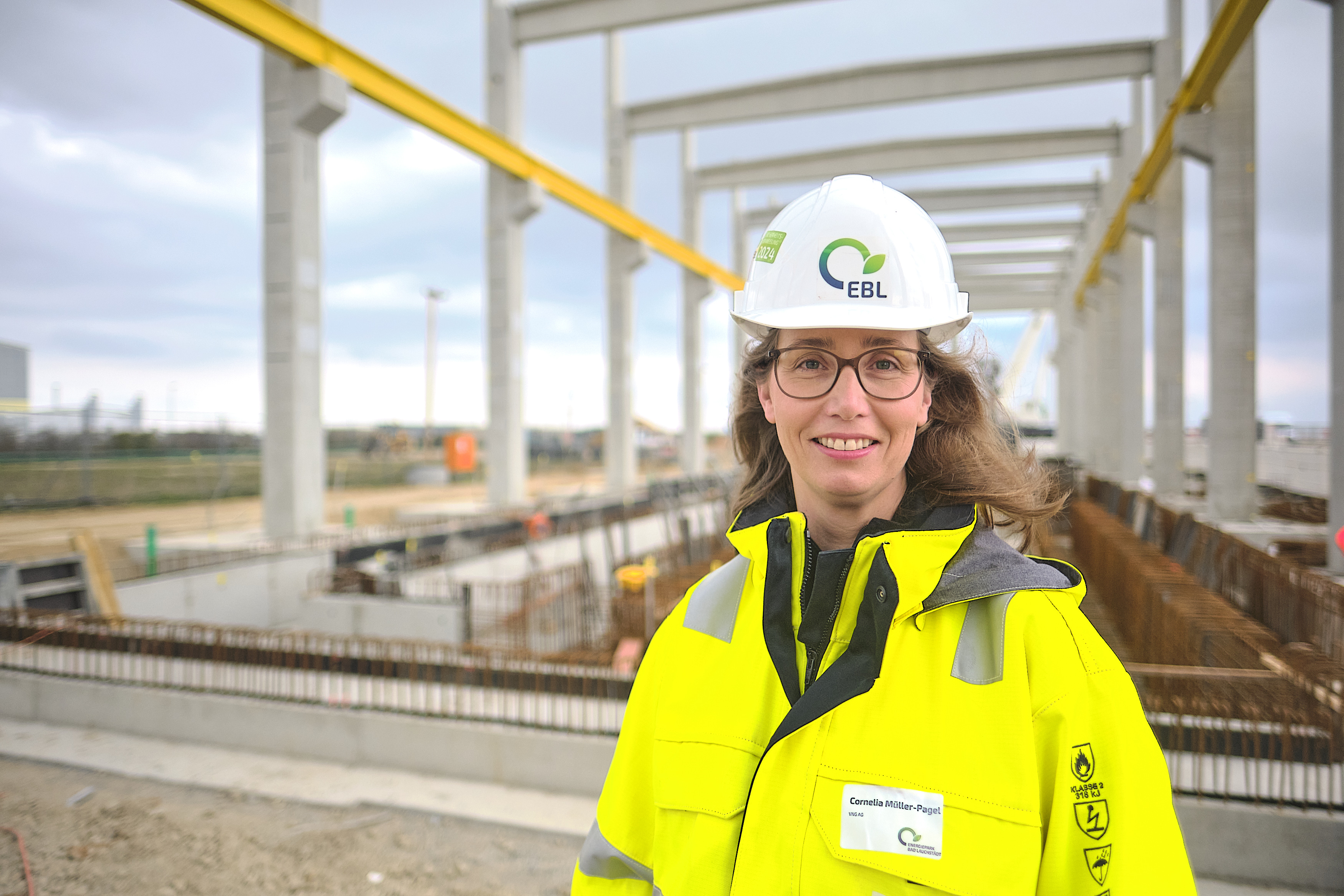
Cornelia Müller-Pagel, consortium spokesperson for Energiepark Bad Lauchstädt, says:
“I am very pleased to receive this award and would like to thank the IEA Hydrogen TCP on behalf of the entire consortium. This recognition belongs to all partners who work together across industry and disciplinary boundaries to implement an integrated hydrogen system under real-world conditions. The challenges of climate change require more than ambitious targets. They require investment, cooperation and the courage to translate innovations into concrete projects with long-term impact. We hope that the experience gained in Bad Lauchstädt can serve as guidance for the further hydrogen ramp-up and the decarbonisation of industry—also beyond Germany.”
From real-world laboratory to industrial reality
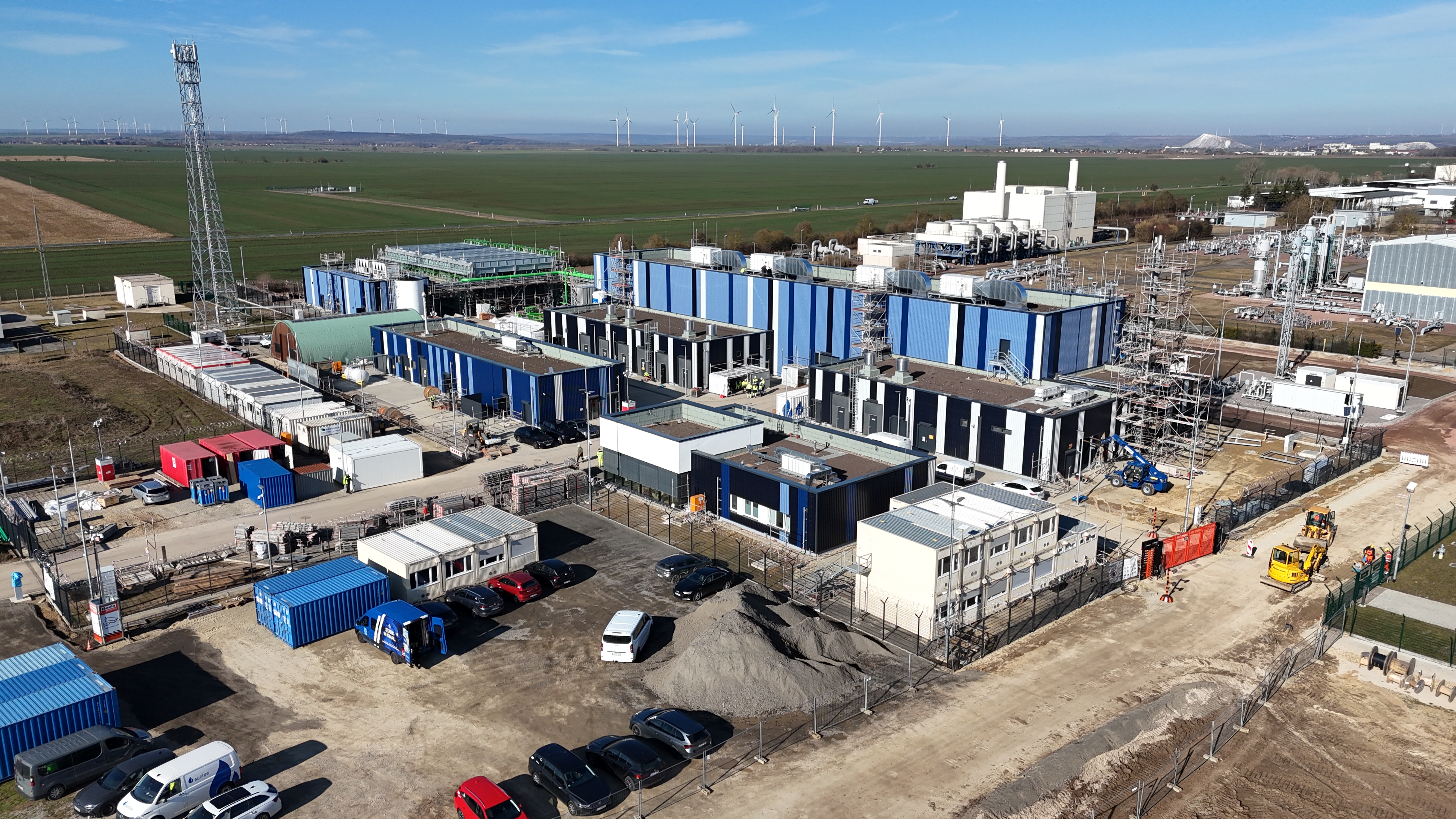
Energiepark Bad Lauchstädt shows how the entire value chain for green hydrogen can be brought together in an overall system. Wind power from a wind farm with eight turbines and around 50 MW of installed capacity is used for hydrogen production in a 30 MW electrolyser. The hydrogen is then processed, metered and transported around 25 km to TotalEnergies’ refinery in Leuna via a converted natural gas pipeline. There, it is intended to replace fossil-based hydrogen in industrial processes in the future. The project is funded as a “Real-World Laboratory of the Energy Transition” under the 7th Federal Energy Research Programme by the German Federal Ministry for Economic Affairs and Energy.
Axel Bree, Federal Ministry for Economic Affairs and Energy explains:
“Energiepark Bad Lauchstädt is an important milestone for Germany’s hydrogen ramp-up. It shows how renewable energy, hydrogen production, storage, transport and industrial use can be combined into a functioning value chain. This makes the hydrogen economy tangible. The project strengthens Germany as an industrial location, creates valuable practical experience and shows how existing infrastructure can be used for a climate-friendly energy supply.”
The award makes Energiepark Bad Lauchstädt internationally visible as a scalable use case for green hydrogen. In doing so, the real-world laboratory contributes to the goals of the award: making proven applications accessible to end users, encouraging investment and political support to overcome cost and infrastructure gaps, strengthening international cooperation and developing new hydrogen markets.
The Bad Lauchstädt Energy Park is a large-scale real-world laboratory for the production of green hydrogen, as well as its storage, transport, marketing and use. As a real-world laboratory for the energy transition, it is the first project to test the entire green hydrogen value chain on an industrial scale. Green hydrogen is produced using a 30 MW large-scale electrolysis plant from Sunfire, powered by renewable electricity from the nearby wind farm. Temporarily stored in a salt cavern specially salted for this purpose, the green hydrogen can be fed into the hydrogen network of the chemical industry based in Central Germany via a converted gas pipeline and, in the future, used for urban mobility solutions. The real-world laboratory thus contributes to researching these future technologies centred on green hydrogen and bringing them to market maturity – for a technologically strong and forward-looking hydrogen region in Central Germany and successful sector coupling across the whole of Germany. To this end, the project partners are investing a total of 210 million euros, which includes 44 million euros in funding as a ‘Real-world Laboratory for the Energy Transition’ from the 7th Energy Research Programme of the Federal Ministry for Economic Affairs and Climate Action (BMWK).
Press pictures